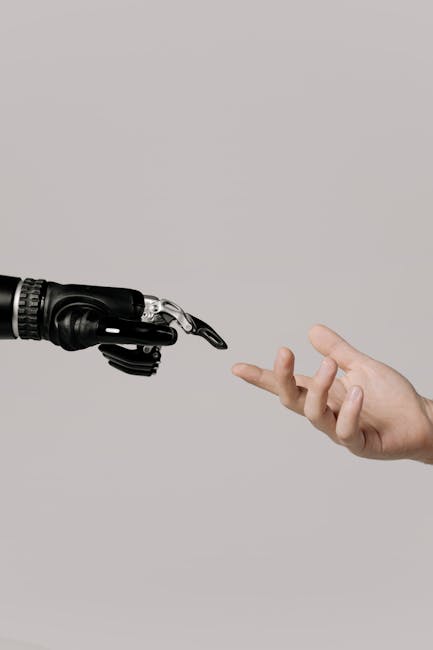
The AI Healthcare Revolution: What Just Happened?
The healthcare landscape is undergoing a seismic shift, measured in hours, not years. In the last 48 hours, a series of AI-driven announcements have accelerated the transformation of patient care, diagnostics, and hospital operations. These aren’t distant research projects; they are real-world deployments and breakthroughs that are reshaping the workforce today.
From AI-powered surgical robots to diagnostic algorithms outperforming human specialists, the pace is breathtaking. This rapid evolution presents a dual challenge: immense potential for improved patient outcomes and significant disruption for healthcare professionals. Understanding these immediate changes is critical for navigating the future of work in medicine.
48-Hour AI Healthcare Breakthroughs: A Snapshot
Let’s examine the key developments that have emerged in the last two days, signaling where the industry is heading.
1. AI Surgical Assistant Goes Live in Multiple Hospitals
A major medical robotics company announced the successful first live procedures using its next-generation AI-guided surgical system. The system, which went live in three hospitals across two countries, uses real-time computer vision to provide surgeons with enhanced precision and predictive analytics during complex operations.
This isn’t just a tool; it’s a collaborative partner that can suggest optimal incision paths and warn of potential tissue damage. The immediate impact is a shift in the surgical team’s dynamic, requiring surgeons to develop new skills in AI collaboration rather than pure manual technique.
2. Diagnostic AI Matches Radiologists in Real-World Trial
Results from a large-scale, multi-center clinical trial were published, showing an AI diagnostic model achieving parity with a panel of expert radiologists in detecting certain cancers from medical images. The key finding was the AI’s consistency and speed, analyzing scans in seconds versus minutes.
This breakthrough directly impacts radiology departments. It suggests a future where AI handles initial screenings, flagging potential issues for human experts to review. This changes the radiologist’s role from primary screener to final arbiter and complex case specialist.
3. Generative AI for Personalized Treatment Plans
A leading research institute released a new open-source generative AI model trained on millions of anonymized patient records and clinical studies. The model can generate draft, personalized treatment plans based on a patient’s unique history, genetics, and current symptoms.
This tool aims to assist doctors by reducing administrative burden and research time. However, it necessitates that physicians develop strong skills in AI oversight, clinical judgment, and patient communication to effectively evaluate and personalize the AI’s suggestions.
The Workforce Impact: Displacement and New Opportunities
These technologies are not replacing entire professions overnight, but they are fundamentally altering job functions and creating new specializations.
Jobs in Transition
- Medical Coders & Transcriptionists: AI-powered natural language processing is automating medical note transcription and insurance coding with high accuracy, reducing demand for manual entry roles.
- Radiology Technicians & Junior Analysts: As AI takes on more routine image analysis, the need for technicians focused solely on basic scan interpretation may decline.
- Clinical Data Entry Clerks: Automated data capture from wearables and AI-driven EHR (Electronic Health Record) population are streamlining this function.
Emerging & Enhanced Roles
- AI-Medical Liaison: A hybrid role bridging clinical practice and technology, responsible for validating AI outputs, training staff on new systems, and ensuring ethical deployment.
- Robot-Assisted Surgery Coordinator: Specialists who manage the AI surgical suite, oversee maintenance, and assist in pre-operative planning using the system’s data.
- Predictive Health Analyst: Professionals who interpret population health data from AI models to design preventative care programs and manage hospital resource allocation.
- Enhanced Surgeons & Specialists: Clinicians who leverage AI as a powerful tool, focusing on complex decision-making, patient rapport, and procedures requiring irreplaceable human dexterity and judgment.
Reskilling Pathways for Healthcare Professionals
Adapting to this new environment requires proactive learning. Here are actionable pathways for those in the field.
For Clinical Staff (Doctors, Nurses, Technicians)
Priority one is developing “AI Literacy.” This doesn’t mean becoming a data scientist. It means understanding how AI models work, their limitations, and how to interpret their outputs critically. Seek out courses on clinical AI applications, data ethics, and human-AI collaboration.
Double down on uniquely human skills: complex communication, empathy, ethical reasoning, and interdisciplinary collaboration. These are the skills that AI cannot replicate and will become your core value.
For Administrative & Support Staff
Transition from data *processors* to data *managers* and *analysts*. Learn to use the new AI tools that are automating your old tasks. Pursue training in health informatics, data visualization, or patient flow optimization using AI dashboards.
Roles are shifting towards overseeing automated systems, handling exceptions, and providing the human touch in patient interactions that require nuance.
Strategic Guidance for Healthcare Organizations
Hospitals and clinics must lead this transition responsibly to ensure quality care and staff retention.
1. Implement “Co-Pilot” Training: Don’t just install new AI software. Invest in comprehensive training programs that frame AI as a co-pilot or assistant. Teach teams how to use it effectively and when to override it.
2. Create Internal Reskilling Programs: Identify staff in roles with high automation potential and offer clear, funded pathways to transition into emerging roles like AI liaisons or data analysts.
3. Foster a Culture of Continuous Learning: Provide subscriptions to online learning platforms, host regular tech talks, and incentivize skill acquisition. Make adaptation a core organizational value.
4. Prioritize Ethics and Transparency: Establish clear governance for AI use. Patients and staff must know when and how AI is involved in care decisions. Build trust through transparency.
FAQs: AI in Healthcare Workforce
Will AI replace doctors?
No. AI is a tool that will augment doctors, not replace them. It will handle routine analysis and administrative tasks, freeing physicians to focus on complex diagnosis, treatment planning, surgery, and, most importantly, the human connection with patients. The role will evolve, not disappear.
What is the most future-proof healthcare job?
Roles that combine deep clinical expertise with strong interpersonal skills and AI literacy are highly future-proof. For example, a surgeon skilled in robot-assisted procedures, a nurse practitioner expert in managing chronic disease with AI monitoring tools, or a psychiatrist using AI for diagnostics while providing irreplaceable therapeutic rapport.
How can I start reskilling if I work in healthcare admin?
Begin with free online courses on platforms like Coursera or edX on “AI for Everyone” or “Healthcare Data Literacy.” Speak to your manager about shadowing colleagues who work with new hospital IT systems. Express interest in being part of the pilot group for any new AI tool implementation to get hands-on experience early.
Conclusion: Embrace the Augmented Future
The last 48 hours have made one thing clear: AI in healthcare is here, and its integration is accelerating. The goal is not a fully automated hospital but an augmented one—where human compassion, judgment, and expertise are amplified by machine precision, data analysis, and efficiency.
The workforce transformation is inevitable. For individuals, the path forward is continuous learning and a focus on the enduringly human aspects of care. For organizations, success lies in strategic investment in their people during this transition. By proactively managing this shift, we can build a healthcare system that leverages the best of both human and artificial intelligence for the benefit of all.
Is your organization ready for the AI-augmented healthcare workforce? Assess your team’s AI readiness and explore reskilling partnerships today to stay ahead of the curve.